Kitchen Wrapping Specialists
Kitchen Wrapping in Milton Keynes
Show us the kitchen you want to update. Get a Free Estimate
Kitchen Wrapping Specialists
Show us the kitchen you want to update. Get a Free Estimate
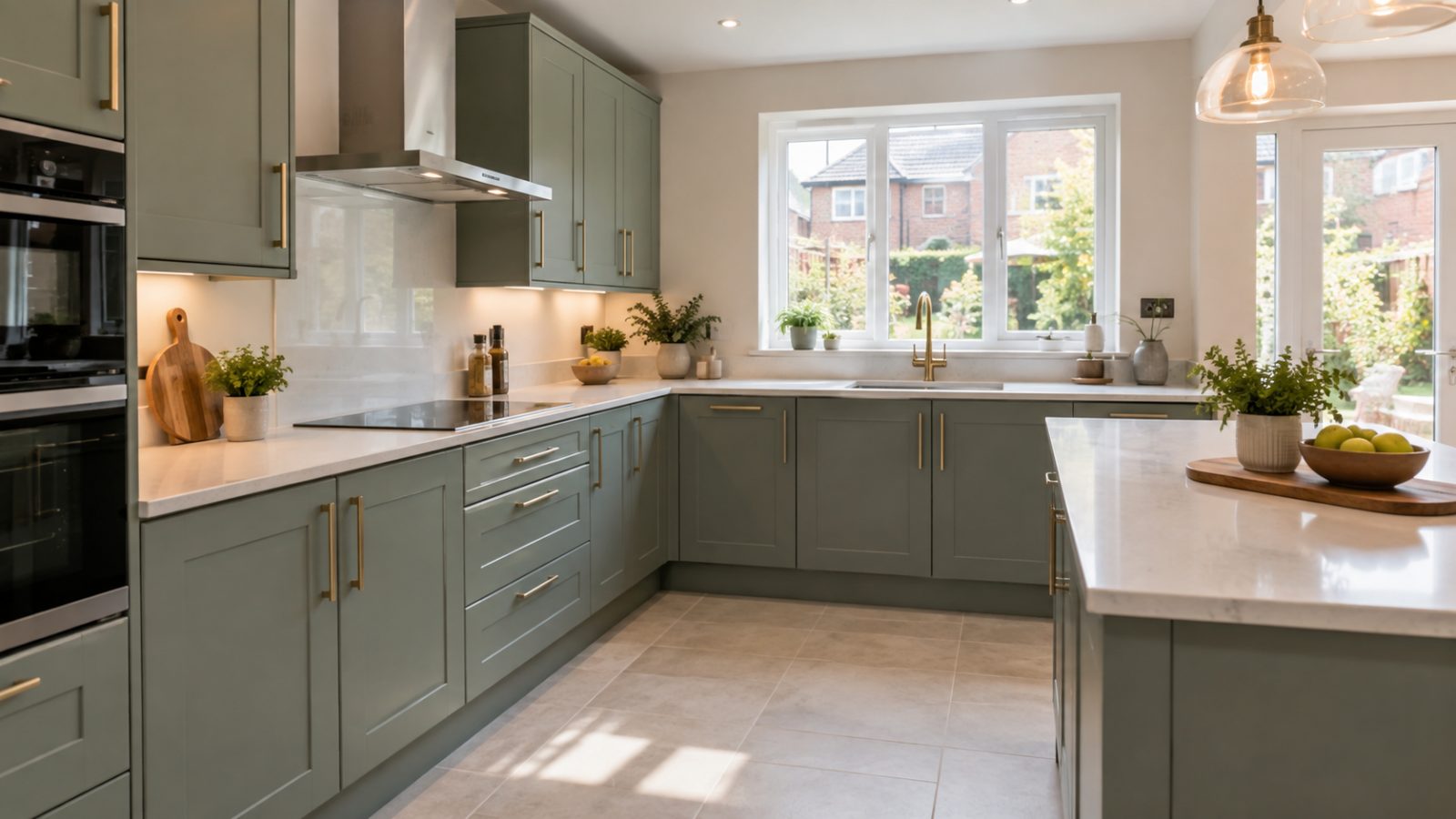
Kitchen wrapping is a practical option when the structure and layout of your kitchen still work but the visible finishes no longer suit the room. Instead of removing every cabinet, we prepare suitable existing surfaces and apply architectural vinyl to create a new colour, texture or overall style. Depending on the kitchen, that can include doors, drawer fronts, exposed cabinet panels, plinths and suitable worktops.
The condition underneath the vinyl is important. Before recommending a full wrap, we look for damaged laminate, swollen board, loose coatings, excessive heat damage and other problems that could affect the finish. A successful kitchen wrap should start with sound surfaces and realistic expectations. Our aim is to give you a clear understanding of what can be transformed and which parts of the kitchen may need another solution.
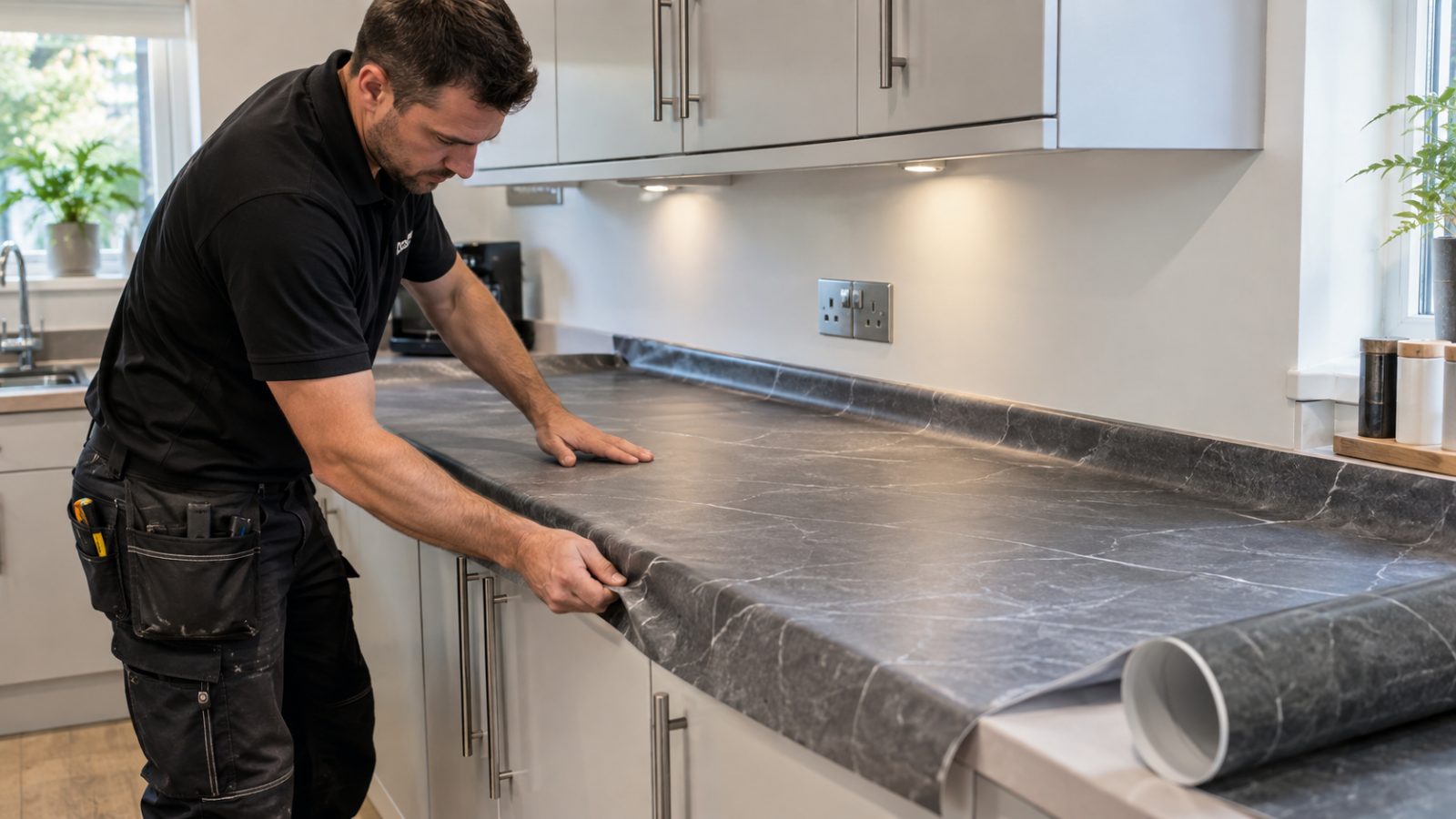
A full kitchen wrap is planned around the visible surfaces that shape the overall look of the room. Some customers want a complete colour change, while others want to keep part of the existing scheme and update only the areas that date the kitchen. We consider the doors, worktops, end panels, handles, splashbacks, flooring and lighting together before agreeing the wrapping scope. The vinyl itself is only one part of the result; cleaning, preparation, accurate trimming and careful finishing around edges are equally important.
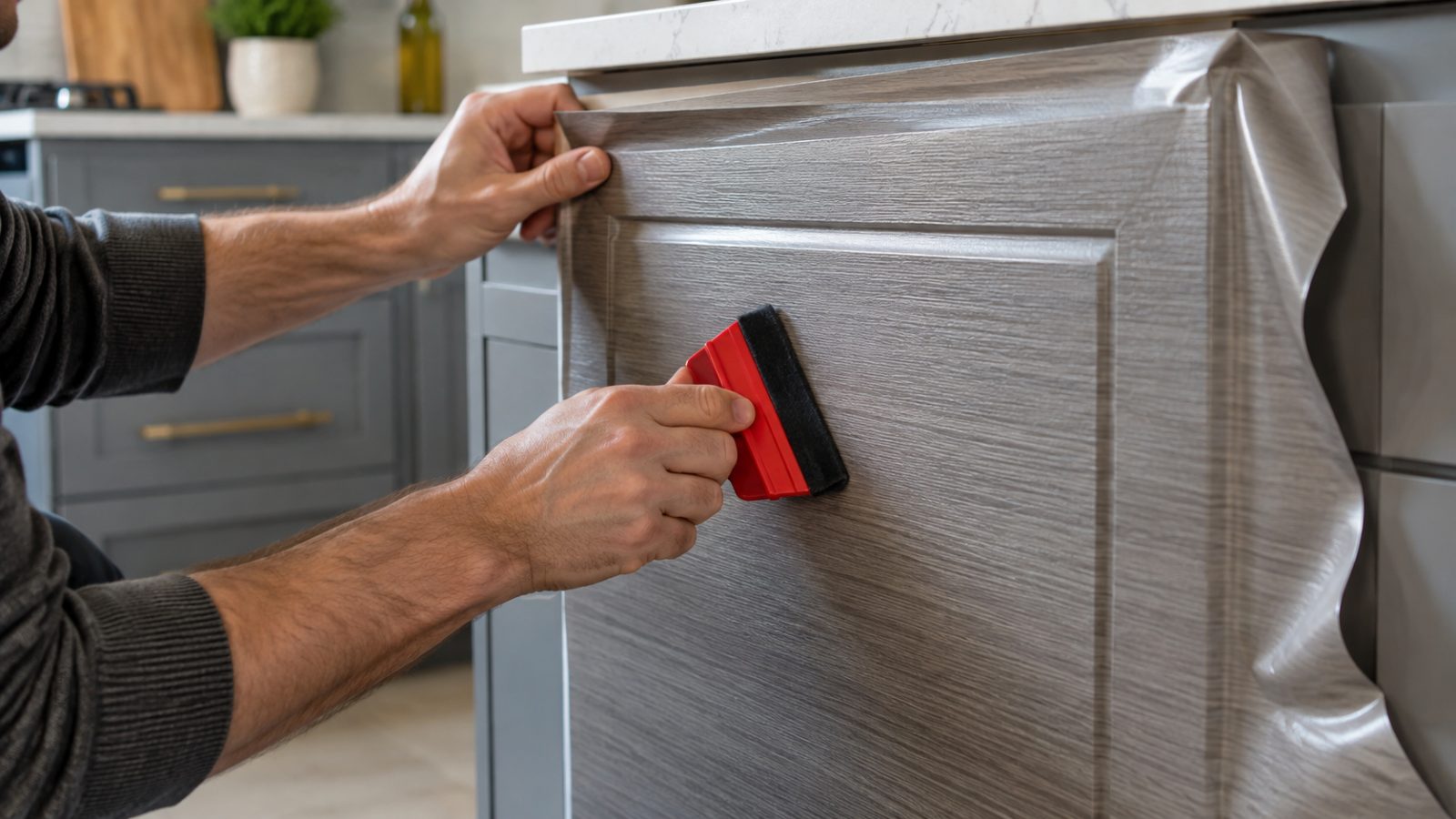
Kitchen doors and drawer fronts make up a large proportion of the visible cabinetry, so changing their finish can alter the room dramatically. We inspect the existing faces and edges, clean and prepare suitable surfaces, and fit the selected vinyl with close attention to corners and returns. Where practical, fronts can be removed temporarily to improve access during preparation and wrapping. Different door profiles require different approaches. Flat slab doors are generally straightforward, while detailed shapes, routed sections or existing damage need closer assessment. We discuss those limitations before work starts rather than relying on the wrap to disguise unsuitable surfaces.
A kitchen can look unfinished if the doors change colour but visible end panels and supporting sections remain in the old finish. Where surfaces are suitable, these areas can be wrapped as part of the same scheme so the kitchen reads as one coordinated design. We plan the direction of the vinyl, visible joints and edges before installation. This is particularly important with wood effects, stone patterns or textured finishes where inconsistent orientation can stand out once the room is complete.
Suitable worktops can sometimes be wrapped to coordinate with newly finished cabinets. Worktop wrapping needs careful assessment because counters face water, cleaning, heat and daily wear. Existing joints, damaged edges, loose laminate or areas around sinks and hobs can affect suitability. When a worktop is appropriate for wrapping, preparation and edge detailing are especially important. We also explain sensible aftercare, including using chopping boards and heat protection rather than treating a wrapped surface as an indestructible layer.
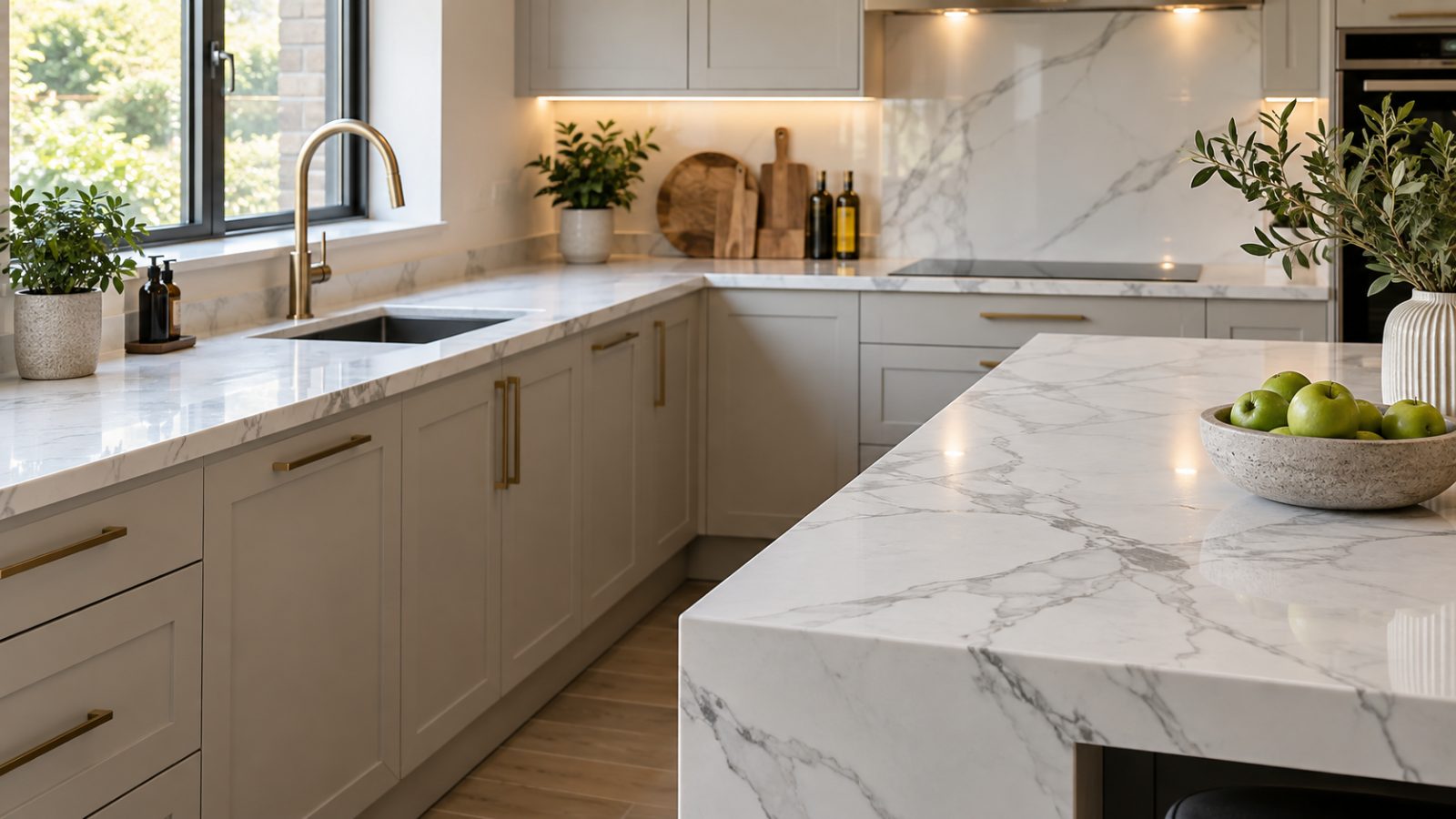
Choosing a finish is about more than picking a colour in isolation. Cabinet shade, worktop pattern, flooring, wall colour, daylight and handles all influence the final appearance. We encourage customers to think about the whole room and whether they want a subtle update or a clear contrast with the existing kitchen. Neutral matt finishes are useful for understated transformations, while wood, stone and textured effects can introduce more character. The right choice depends on the surfaces being wrapped and the style you want to live with every day.
| Service | Estimated Cost | Average |
|---|---|---|
| Small kitchen wrapping project | Quoted after assessment | Varies by surface count |
| Medium kitchen wrapping project | Quoted after assessment | Varies by preparation |
| Cabinets plus suitable worktops | Quoted after assessment | Varies by materials and layout |
Kitchen wrapping prices depend on the number and size of surfaces, door profiles, existing condition, chosen vinyl and preparation required. We prefer to assess the actual kitchen rather than publish a figure that may not reflect the work involved.
Vinyl should not be used to hide failing surfaces. We inspect the existing kitchen and flag issues that could affect the finish or durability before agreeing the job.
For full kitchen projects we consider doors, panels and suitable worktops together, helping the finished room feel intentional rather than pieced together.
Corners, edges, cut-outs and returns are the areas customers handle and see every day. We give those sections the time they need during fitting.
We explain how to clean and use wrapped surfaces sensibly, including precautions around heat, sharp objects and standing water.
If your kitchen layout still works but the finish does not, wrapping may be worth considering. Tell us what you would like to change.
Free — no obligations
Start with the areas you want to change, the approximate size of the kitchen and the condition of the existing surfaces. Photos can also help establish whether wrapping looks suitable.
We look at door construction, existing coatings, edges, worktops and any signs of swelling, peeling or damage. This helps us define a sensible wrapping scope.
We discuss colours and finishes in relation to the rest of the room so your new cabinet and worktop scheme works with flooring, walls and hardware.
Suitable surfaces are cleaned and prepared before vinyl is applied. Preparation time varies because older kitchens and heavily used surfaces can need more attention.
The vinyl is fitted, trimmed and finished around edges, corners and relevant details. Doors or drawers are refitted where they have been temporarily removed.
We review the finished surfaces and explain practical care so you know how to clean and protect the wrap in everyday kitchen use.