Kitchen Cabinet Wrapping Specialists
Kitchen Cabinet Wrapping in Milton Keynes
Ask us about wrapping your cupboard doors and panels. Get a Free Estimate
Kitchen Cabinet Wrapping Specialists
Ask us about wrapping your cupboard doors and panels. Get a Free Estimate
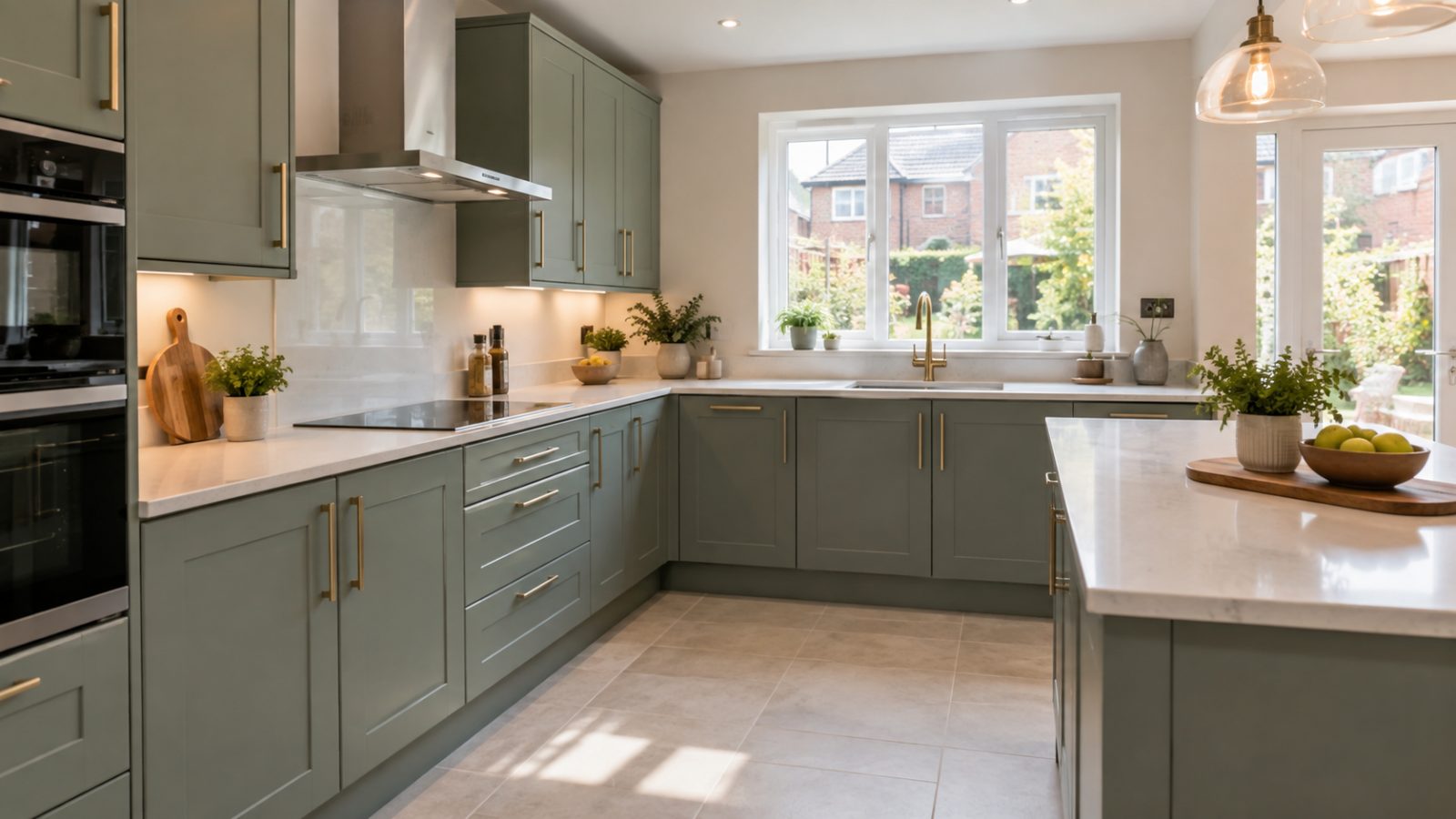
Kitchen cabinet wrapping changes the appearance of suitable cupboard doors, drawer fronts and visible panels while keeping the underlying units in place. It can be a useful choice when your cabinets remain structurally sound but the colour, texture or surface style feels tired. A coordinated wrap can make a familiar kitchen feel lighter, darker, calmer or more contemporary without turning the room into a full construction project.
Cabinet wrapping is not simply a matter of sticking vinyl over whatever is already there. The existing face needs to provide a stable base, and grease, loose coatings, damaged edges or swelling need to be dealt with honestly. We inspect the kitchen first and explain which elements appear suitable for wrapping. Where a door is badly damaged or an existing covering is failing, replacement may be a better option than trying to hide the problem.
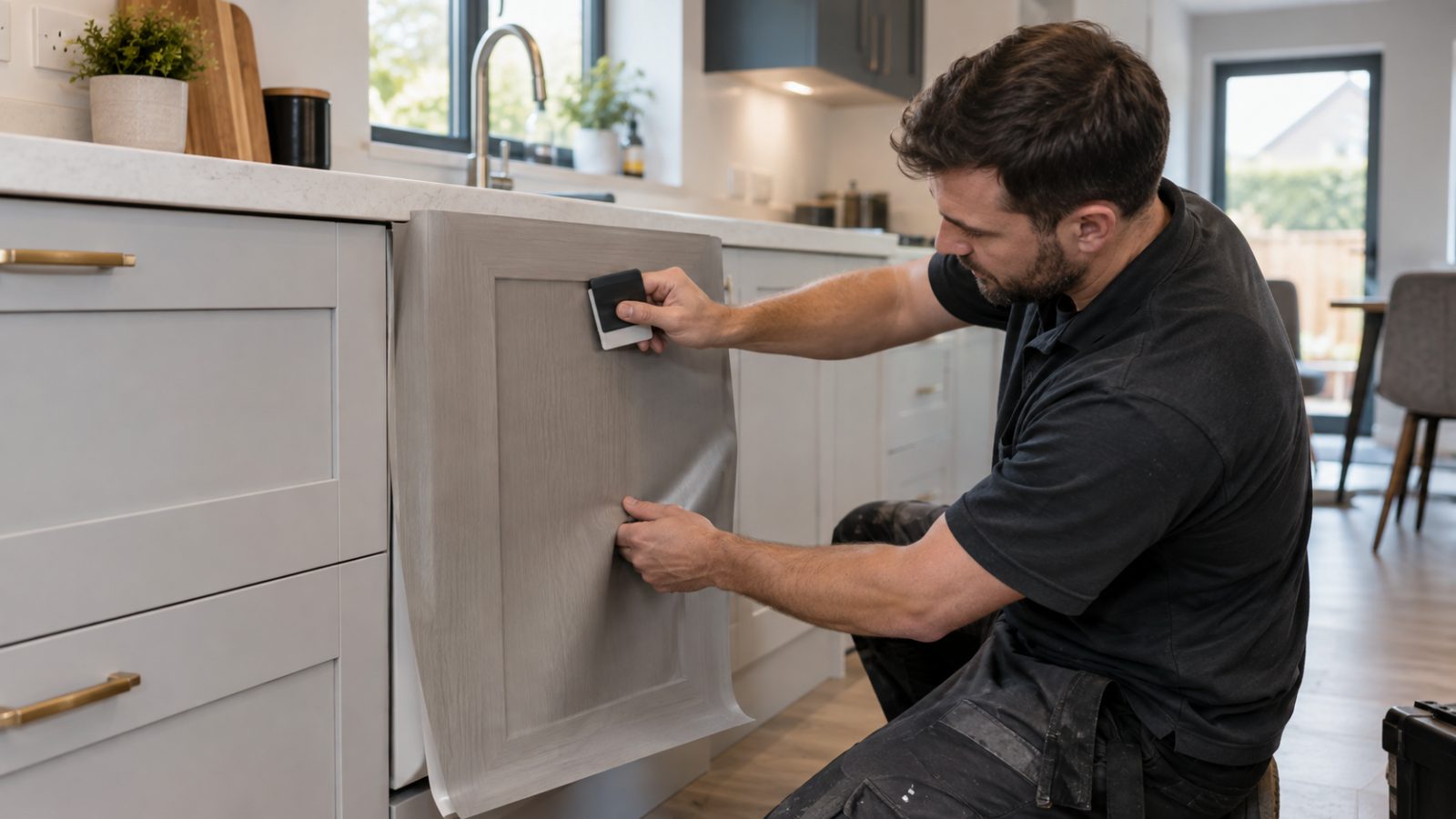
Every kitchen has its own mix of doors, drawers, end panels, filler pieces, plinths and decorative sections. For a good result, those details need to be planned together. A colour change on the main doors can look incomplete if large visible panels remain in the original finish, so we agree which surfaces are included before work begins. We also look at handle positions, door gaps and neighbouring materials because they can influence how cleanly the finished kitchen reads.
Flat slab-style doors are common in modern kitchens and can provide a clean base for a wide range of vinyl finishes when the existing surface is sound. Preparation usually includes detailed cleaning, inspection of edges and attention to any chips or imperfections that could affect the final appearance. The simplicity of a flat door does not remove the need for accuracy. Alignment, edge finishing and consistent grain or pattern direction remain important, especially where a wood-effect vinyl is used across several doors.
Drawer fronts should be planned alongside cupboard doors so the colour and finish stay consistent across the kitchen. Where fronts can be removed safely, temporary removal may give better access to edges during preparation and application. We also check handles, finger pulls and surrounding gaps. If hardware is being retained, we work around the existing configuration rather than pretending every kitchen has the same fittings.
Visible cabinet ends and lower plinths often make up a surprisingly large part of the kitchen. Wrapping appropriate panels can help a cabinet transformation look complete instead of stopping abruptly at the last door. These areas may have different materials or levels of wear from the doors, so we assess them separately. Sections close to floors, appliances and water sources can need additional cleaning and inspection.
Some profiled, routed or heavily detailed doors can be more challenging than flat fronts. Whether a particular shape is suitable depends on the depth of the profile, the existing coating and how the vinyl can be formed and finished around the design. We do not assume every decorative door can be wrapped successfully. If the profile or condition is likely to compromise the finish, we explain that before agreeing the project.
| Service | Estimated Cost | Average |
|---|---|---|
| Doors and drawer fronts | Quoted by quantity and size | Varies by door style |
| Doors, drawers and end panels | Quoted after assessment | Varies by coverage |
| Partial cabinet colour change | Quoted by selected surfaces | Varies by preparation |
The cost of cabinet wrapping depends on the number of fronts, door profile, panel sizes, existing condition and vinyl selected. A surface assessment allows us to quote for the actual work rather than relying on a misleading standard kitchen size.
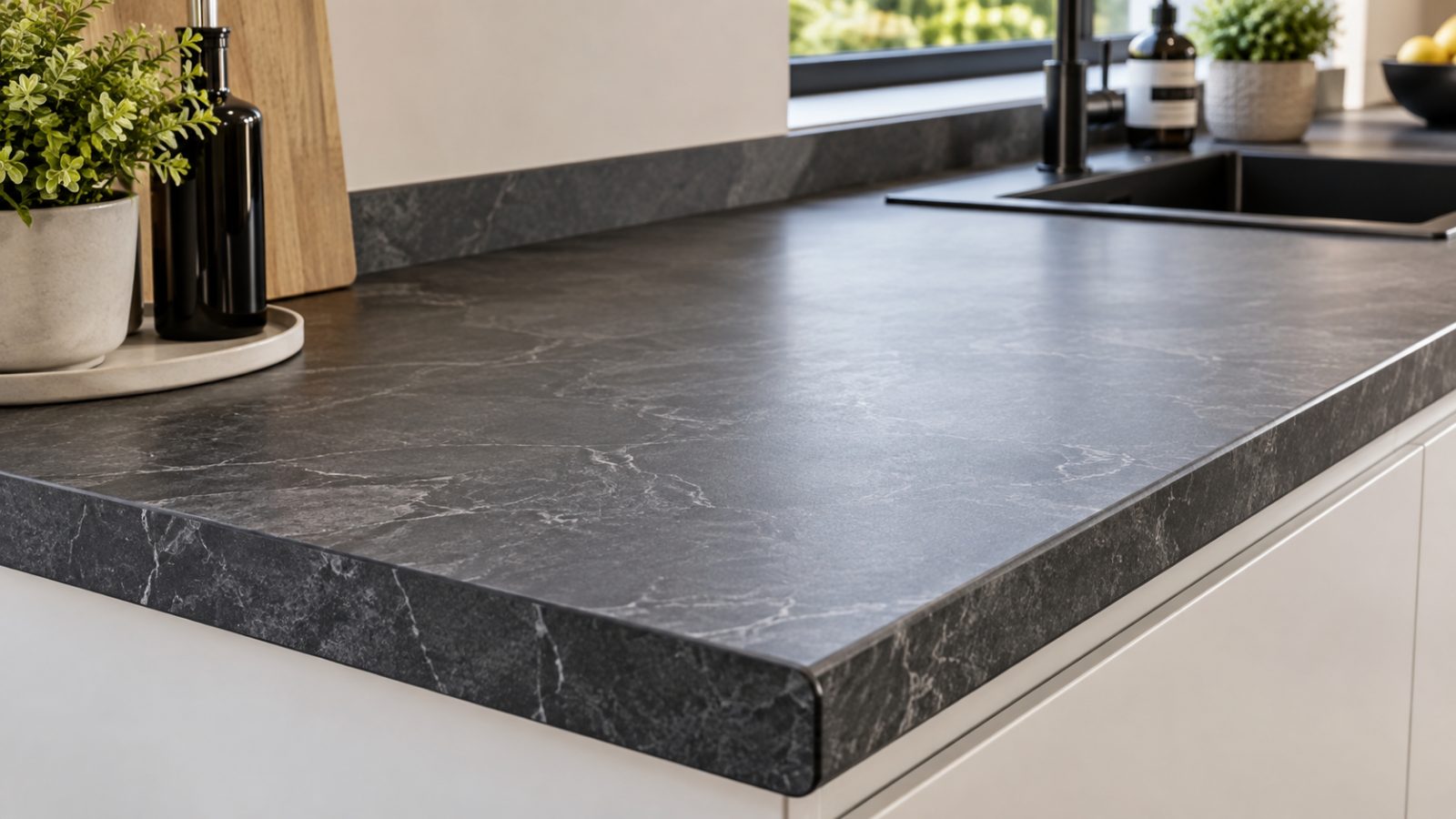
Kitchen doors collect grease and handling marks over time. We treat cleaning and preparation as an essential part of the project rather than an optional extra.
We plan grain direction, colour continuity and visible end panels together so wrapped sections feel like part of the same kitchen.
Swollen board, loose coatings and badly damaged edges can cause problems. If a door is not a good candidate for wrapping, we say so.
Where fronts are temporarily removed, we keep track of their original positions and refit them carefully once the wrapping work is complete.
Want to change your cupboard colour without replacing the whole kitchen? Send us the details of your cabinets.
Free — no obligations
We establish how many doors, drawer fronts, end panels and other visible sections you want to change.
We inspect surfaces and edges for loose coatings, swelling, deep damage and other issues that could affect the wrap.
The chosen colour or pattern is considered alongside the worktop, floor, handles and wall finishes already in the room.
Suitable fronts and panels are prepared carefully. Some pieces may be removed temporarily where that improves access.
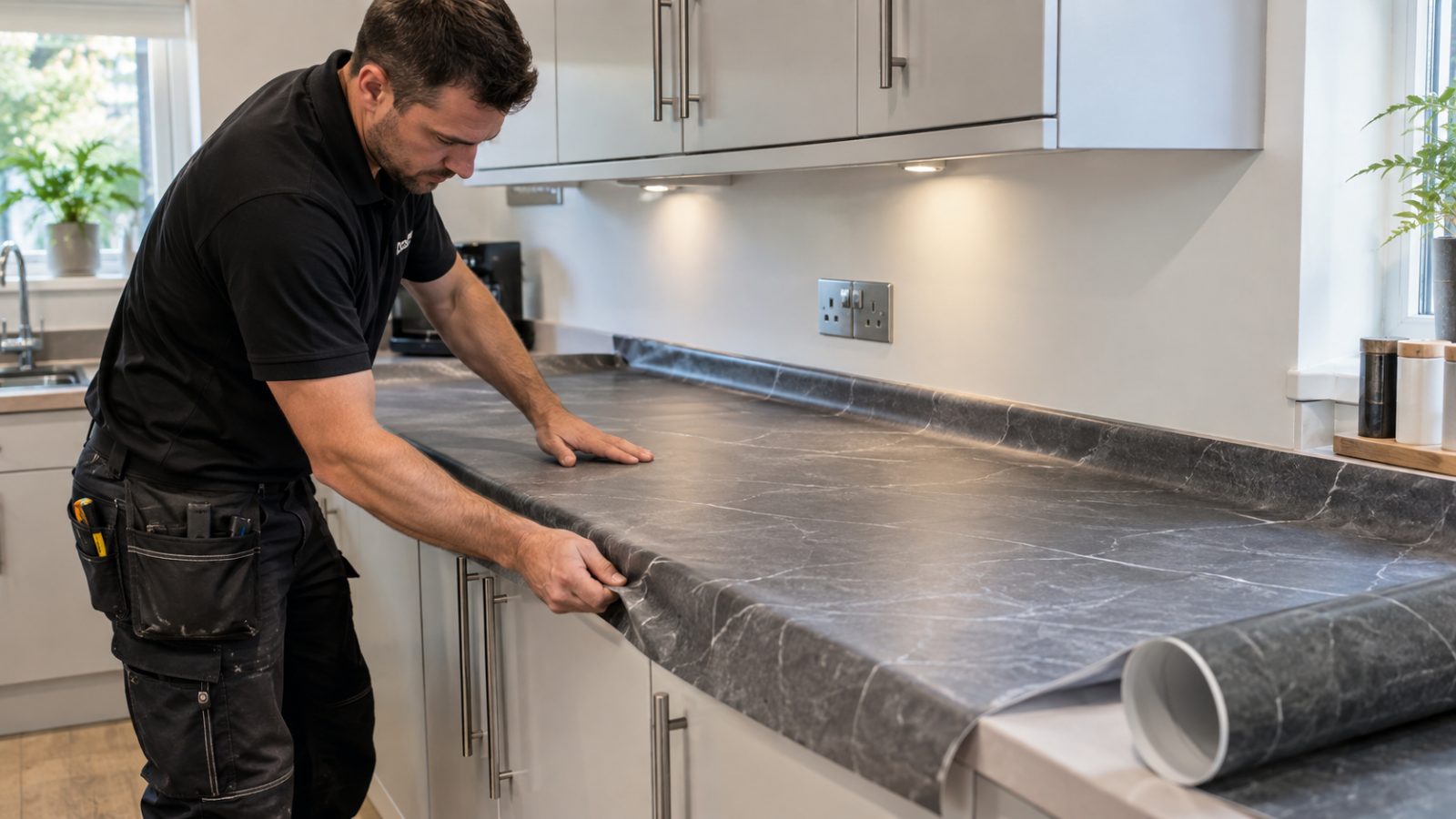
Vinyl is fitted with particular attention to corners, returns, edges and consistent pattern direction.
Cabinet components are put back into position where required, followed by final checks and straightforward aftercare guidance.